in the spring of 2025 i made a bargain with my intro physics professor. it was simple, if i could build a rail gun, i wouldn’t have to take the final physics examination as i would be demonstrating sufficient knowledge of electricity and magnetism. now i knew he was half joking and expecting the whole thing to be forgotten by the next day, but i’m a stubborn individual and decided to ignore my complete lack of engineering know-how and build one anyways. anyone would rather electrocute myself with 450V than take an exam right? seeing as this was almost exactly a year ago, and i was not particularly thorough with documentation, this will be a pretty brief write up, mostly to function as evidence that i did the thing. my memory is spotty, and my knowledge of the physics involved has increased exponentially as i now approach the end of my junior year and heated entanglement with griffiths electrodynamics. there was a nonzero amount of math involved to find the appropriate rail length, bleed resistor value, projectile weight, etc. if you want a complete guide this will not be the place as i don’t have any of the calculations saved and don’t feel like doing them again.
i’m not sure who will be reading this, but i realized it’s probably a good idea to quickly explain what a rail gun is, how it works, etc. if you’ve taken introductory physics courses, you’re probably already familiar with the mechanics. you’ll commonly see railgun type problems in introductory electromagnetism to illustrate lorentz force and motional emf concepts.
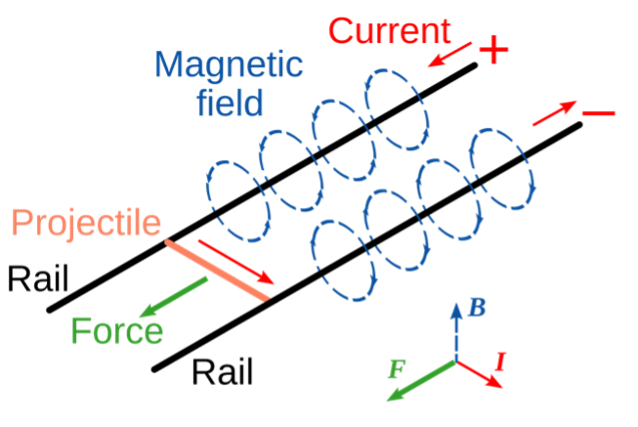
in a “hot rail” design two conducting rails are charged to high voltages, one negative and one positive, to create a large potential difference. when the projectile (also conducting) is introduced, the rails short circuit and a force acts on the projectile pushing it forward at a (hopefully) high speed. the motion comes from the lorentz force, the equation can be seen here:
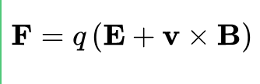
frequently strong neodymium magnets are added so that their field is parallel to the induced B field, thereby increasing the force. be sure the fields are adding not subtracting! ask me how i know this
my first goal was to do some preliminary research, you can find strangers on the internet building almost anything, but to get things done i was going to need to find someone more knowledgeable than i. my first point of contact was a theoretical physics grad student who sings a mean chapel roan after a few drinks. we spent about four hours brainstorming in his lab (windowless room with computer), unfortunately i can no longer find the photos of the blackboard but like good theorists we got completely sidetracked by a hypothetical “railgun end state” with infinite rails. we took a quick break to raid the physics demonstration room which was rumored to house high voltage capacitors.

this was a lie. there were six of these, each with odd documentation and missing screws, but it’s all we had. back at the blackboard we calculated how much force would be required to get a light projectile up to 20 m/s at the max voltage these would provide on rails of about 12 inches. we ended with something like 10^9 newtons… with theory no longer cutting it, and seeing as my school has no engineering department, i turned to the next best place, the HAM radio club. i’m completely indebted to one of the fabrication employees/HAM radio club advisors who taught me how to operate the laser cutter, helped me with the prototype, and secured high voltage capacitors on my behalf. i would not have been able to do this otherwise, thanks! we first made a proof of concept using tinfoil, two magnets on a rod, and a 9V battery (you can do this too!).
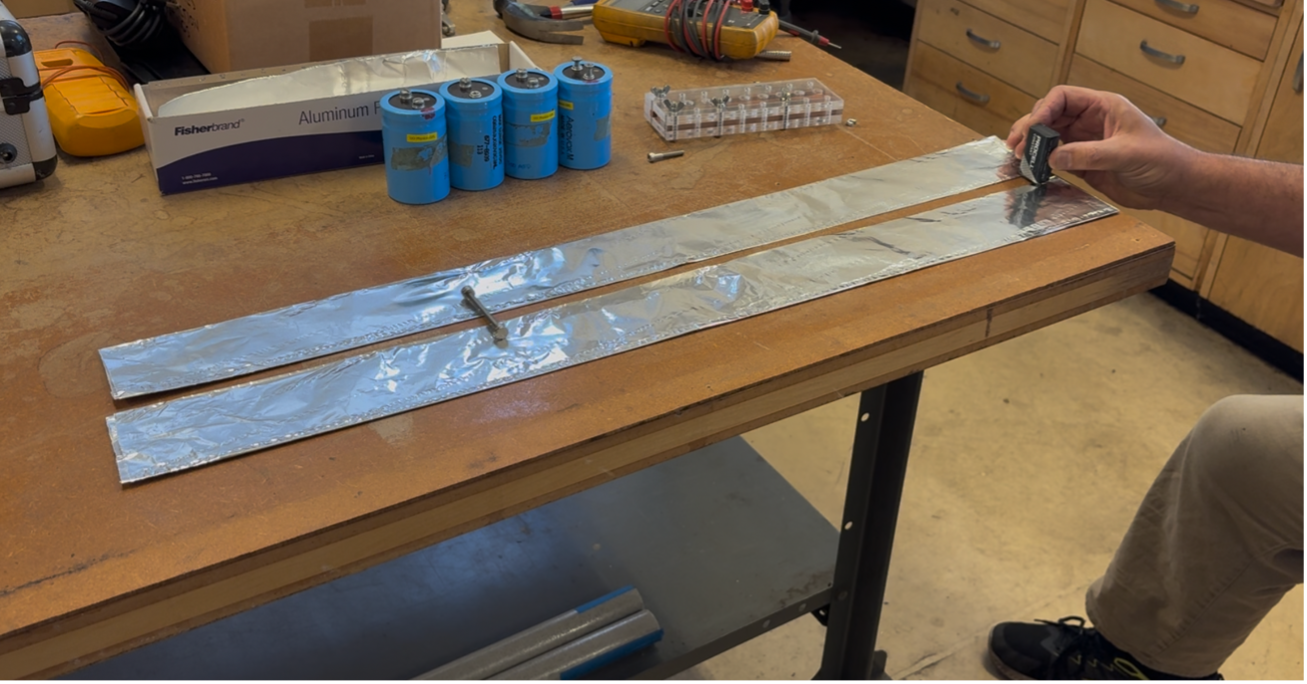
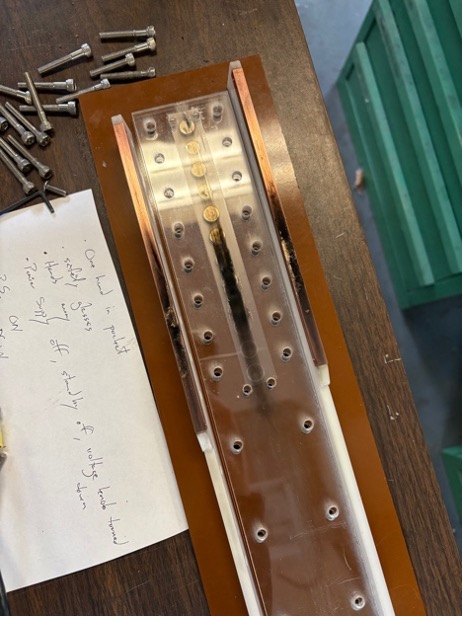
we then got around to designing a prototype that could be made from scrap acrylic.
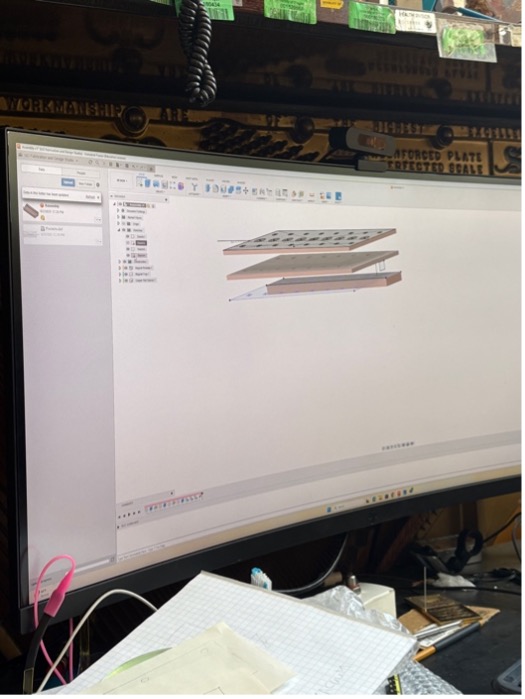
the idea was to have little slots for some neodymium magnets on the top and bottom surface, two copper rails running along, and layers of acrylic and screws holding everything in place for the big launch. i really had only a few weeks to get this together, so i got trained up on the laser cutter and quickly made the prototype.

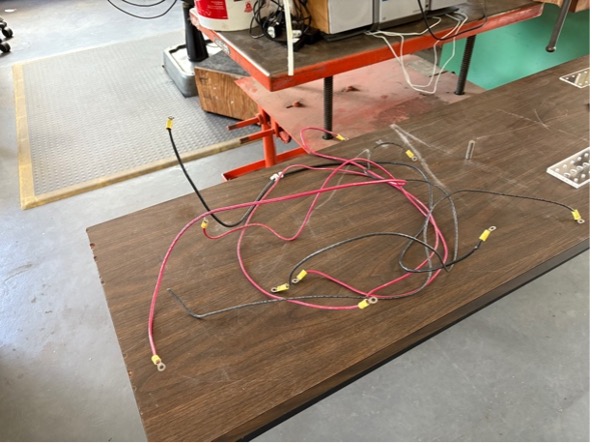
i presented this to my professor at his next office hour, just to ensure he was aware of my continued commitment. the next goal was to start collecting the pieces necessary to make the thing as functional and safe as possible. lofty ideas were thrown around, like welding our own projectiles, or gassing the chamber with argon to reduce welding. ultimately, i was brought down to earth when i realized i had no high voltage power supply nor high voltage rated wires. i found the wires by stripping an unnamed and dilapidated machine that was brought to the tech dump.
the high voltage supply was a little trickier. i was stuck with something old and dusty i found on an abandoned shelf, complete with vacuum tubes and a cracked casing, but it read up to 500V so who was i to complain.
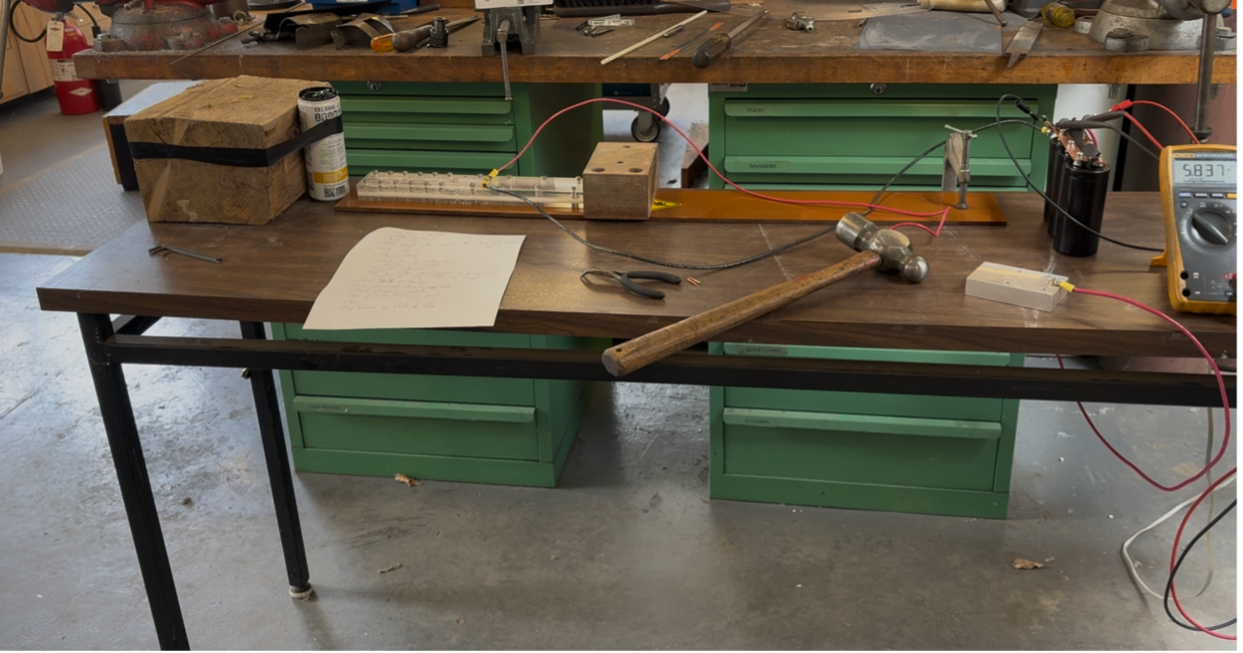
for the first test we used the old capacitors to test the circuit before charging up to the full 450V that the new capacitors would provide. this also gave us a chance to test our kick-off mechanism. the positive lead from the capacitors was bolted to a metal slab (as you can see below). The positive rail was then connected to the hammer (technically not a hammer but I’m forgetting its christian name). this acts as a switch in the circuit that closes when you bring the hammer down on the slab.

i knew the projectile wouldn’t launch with the voltage they provided, but i wanted to ensure nothing was going to go catastrophically wrong and that the bleed resistor was going to do its job before i, a student who 5 weeks prior could hardly even define voltage, set it off. all went according to plan and i kept my eyebrows intact. our shiny new capacitors arrived just in time, as my final exam loomed overhead.

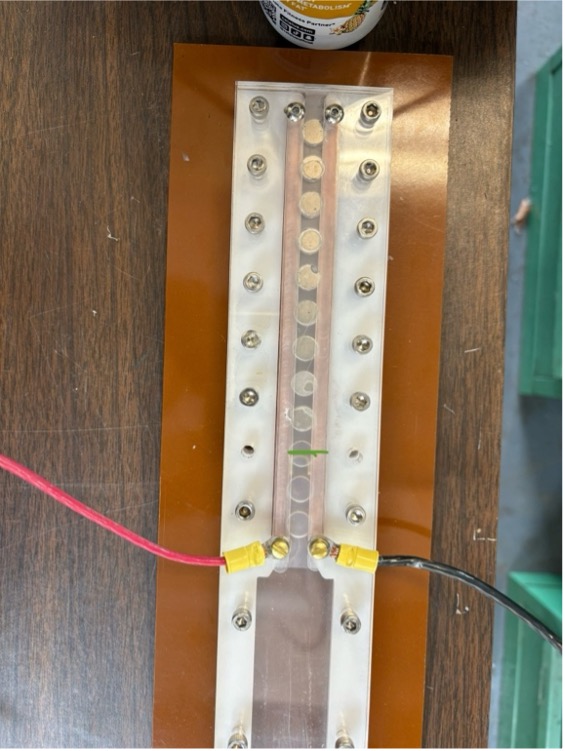
the day was upon us and all was asleep in the early morn. i’d collected a small posse of observers full of morbid curiosity and wagers on my electrocution or failure to launch, the most important of which was my professor. my target was an old celsius can taped to a block, additionally i added an insulating foam pad between the positive and negative terminals on capacitors, just to ensure there was no jumping. i also fiddled with the bleed resistor value, naturally never writing down what i settled on. given the short time frame i had no plans to measure speed or power, a dent in the can was all i needed. looking back i don’t know why i didn’t place the can farther away, it would have made for a better spectacle. here you can just barely see the projectile loaded where the green line is.
the first few tests were a bust. if you decide to make one of these all your own, you’ll quickly run into the problem of projectile welding. there is an unending conversation over message board about what projectiles will make welding less likely, i only had thin copper strips i bent into the shape of staples. i did use a pencil to try and add some graphite to the edges that contact the rails but welding occurred anyway. cut to me scraping metal off the rails in embarrassment while my professor looks on. the wagers were looking bleak for the optimistic as welding occurred twice more. at some point i decided to look for something new and landed on a conveniently sized industrial staple laying on the work bench, which is probably made from steel. i decided to give this a go.
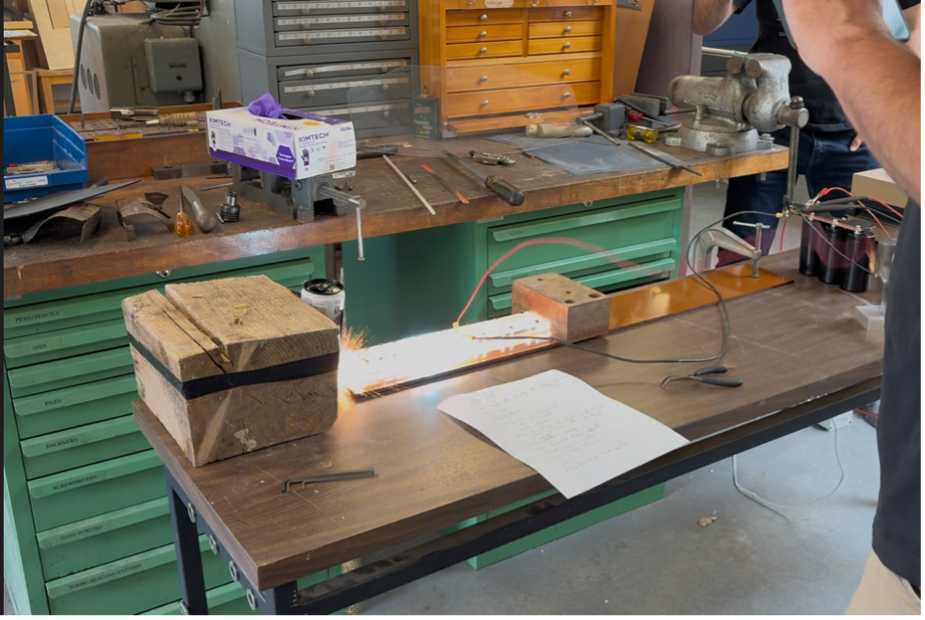
eureka! we have not only a dent but a melted can. documentation of the successful launch and aftermath is sparse, but it did happen. after the launch we collectively agreed to call the contraption the linear lorentz accelerator, to give us a shot at using it as a physics class demonstration.
this project kickstarted my interest in building things. before this i really knew nothing about electronics or the lively diy community on the internet. as a kid i loved to take things apart but was easily distracted and never took the time to put them back together. i’ve now learned to revisit this lost hobby with a more mature patience, and it all stemmed from desperate avoidance of an exam (which i still had to take, turns out there are policies about that or whatever).